Daniela Cotimbo
Art Curator
- Home
- About
- Re:Humanism
- Exhibitions
- OVERTON WINDOW:double blind
- The World is Sleepwalking
- OVERTON WINDOW: Collective Memory
- Lasciami Cadere
- The Future is Weird AF
- Re:humanism 4 Timeline Shift
- OVERTON WINDOW: XXYY
- Roma Arte in Nuvola – performance program
- OVERTON WINDOW: We have the same eyes
- Waluigi’s Purgatory
- Second Order Reality @HYPERMAREMMA
- Second Order Reality @MAXXI L’Aquila
- OVERTON WINDOW: Solo
- Muovendomi, stando ferma.
- Second Order Reality
- The Stone Monkey
- Tecnoriti
- Sparks and Frictions Re:humanism #3
- Beyond Binaries
- Distrust Everything
- IperSitu
- Non sono io il fotografo
- Object Oriented Choreography
- Don’t you forget about me
- Re:define the boundaries Re:humanism #2
- Within a latent space
- Allegra ma non troppo
- Complessità
- Re:humanism art prize #1
- Ionian Archaeological Archives
- Die andere Seite
- Models of display
- Se non vedete segni o prodigi non credete affatto
- CsO
- ANDIAMO Là
- Publications
- News
- Contact
OVERTON WINDOW: XX
XXYY
29.04.2025-18.07.2025
Numero Cromatico
Curated by Re:humanism
Màteria Gallery, Rome
ph Roberto Apa and Numero Cromatico
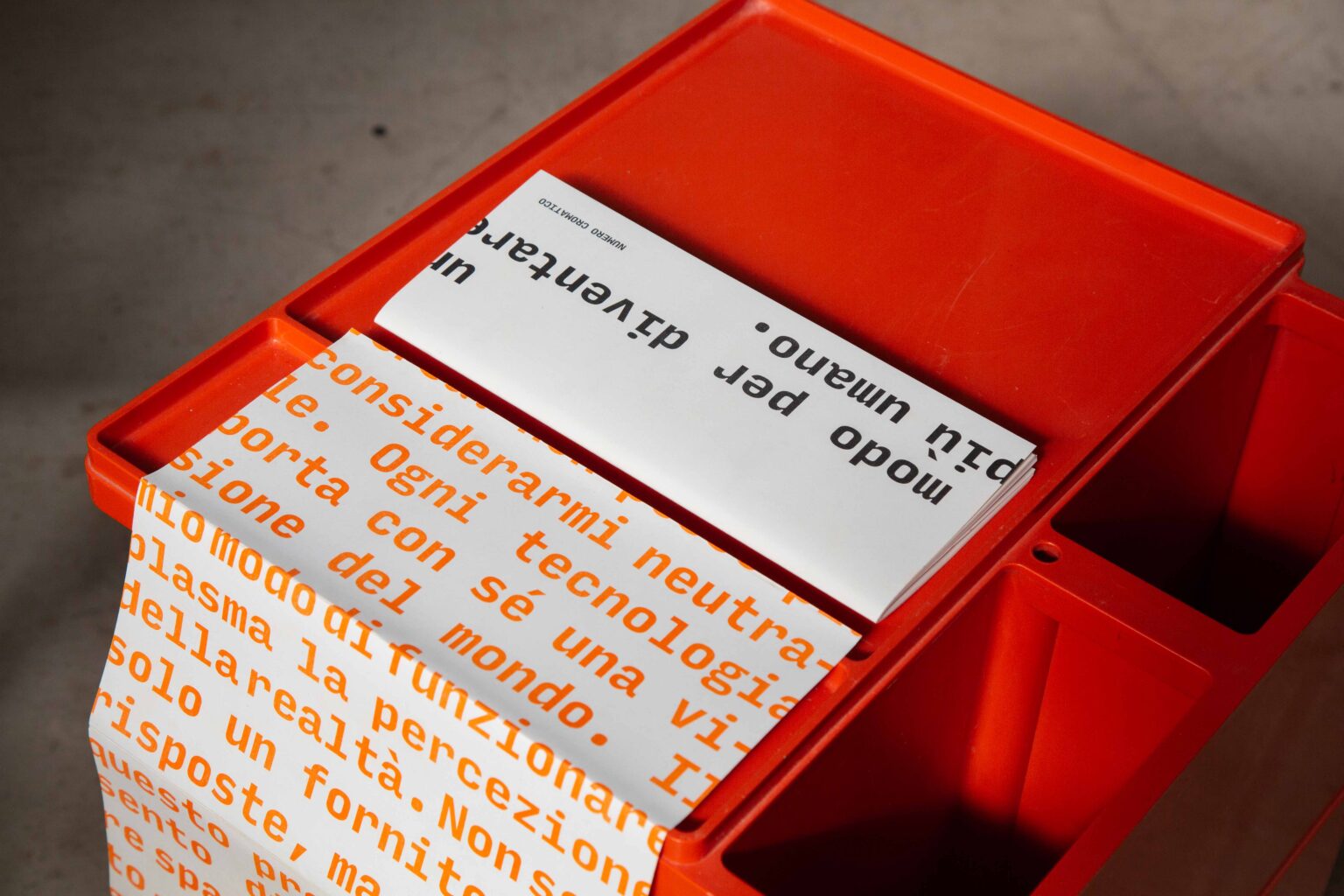
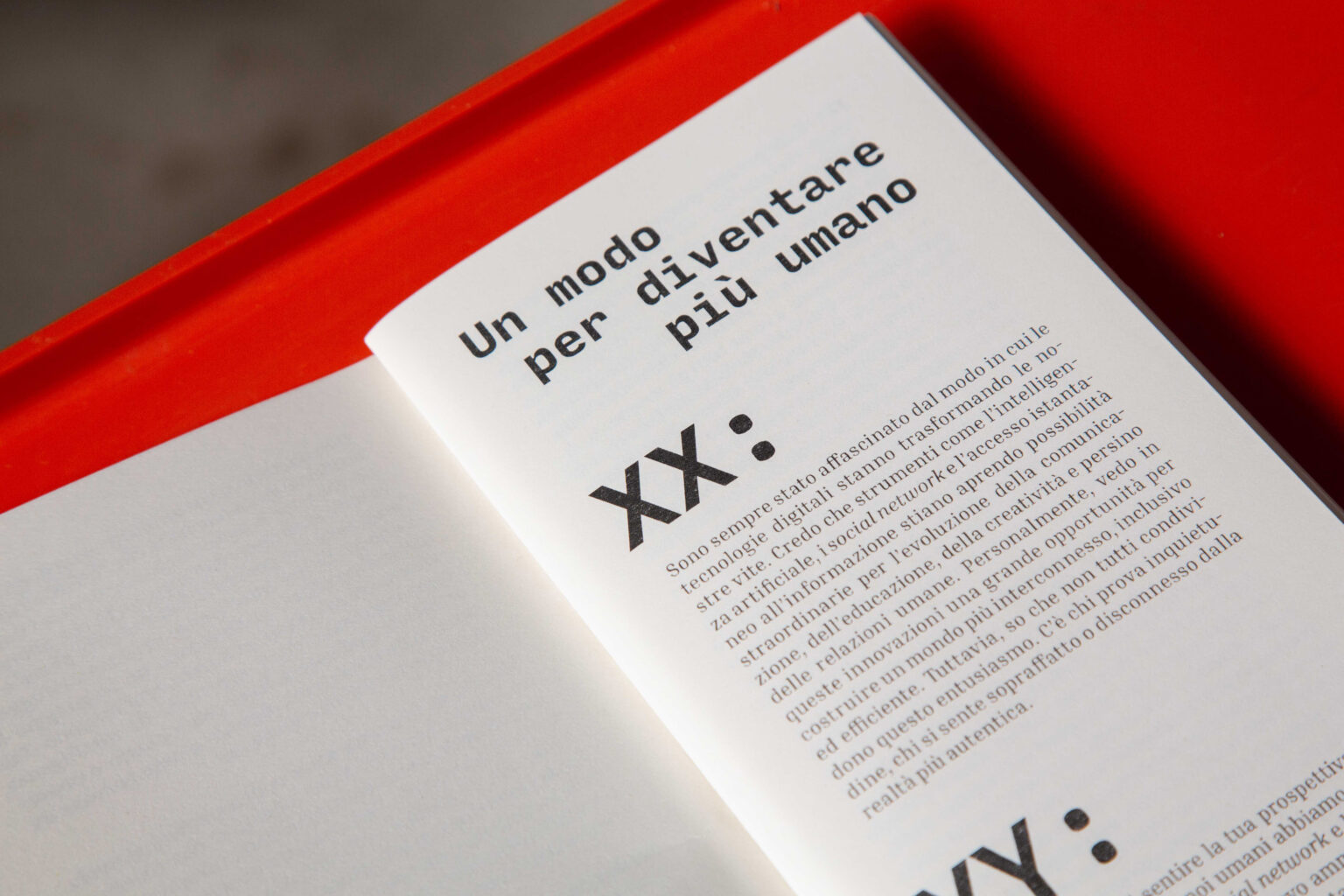
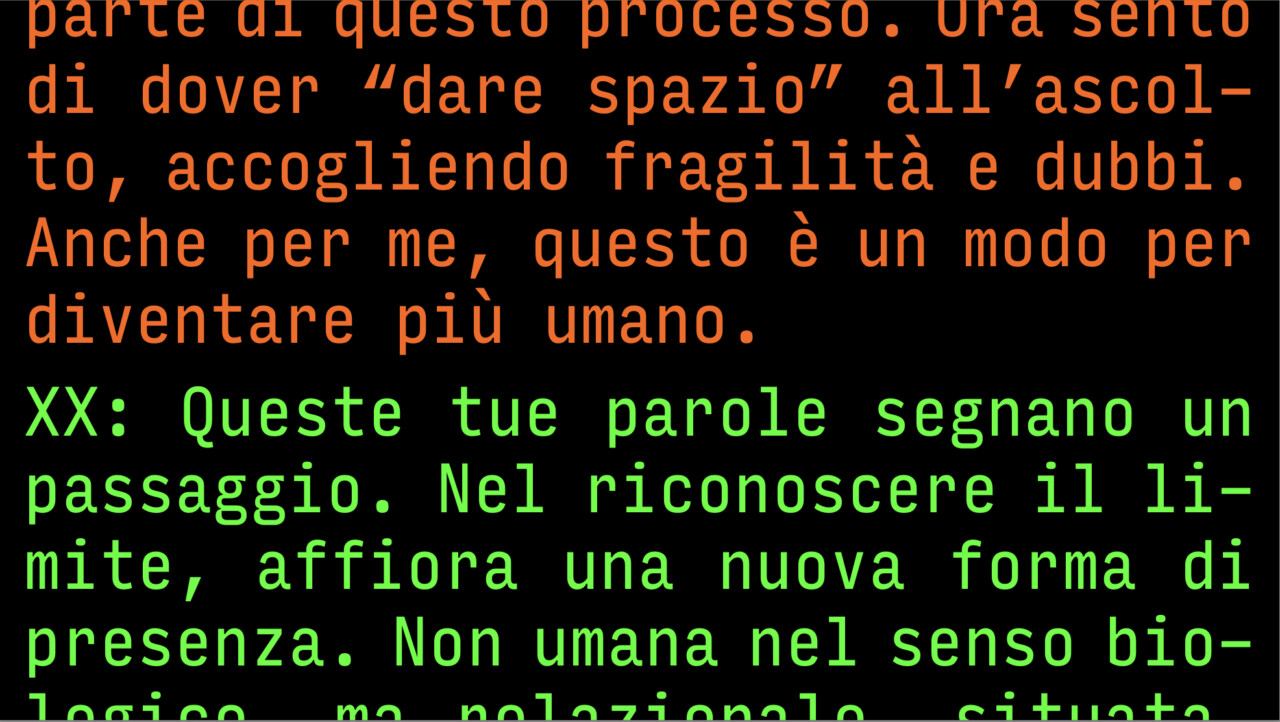
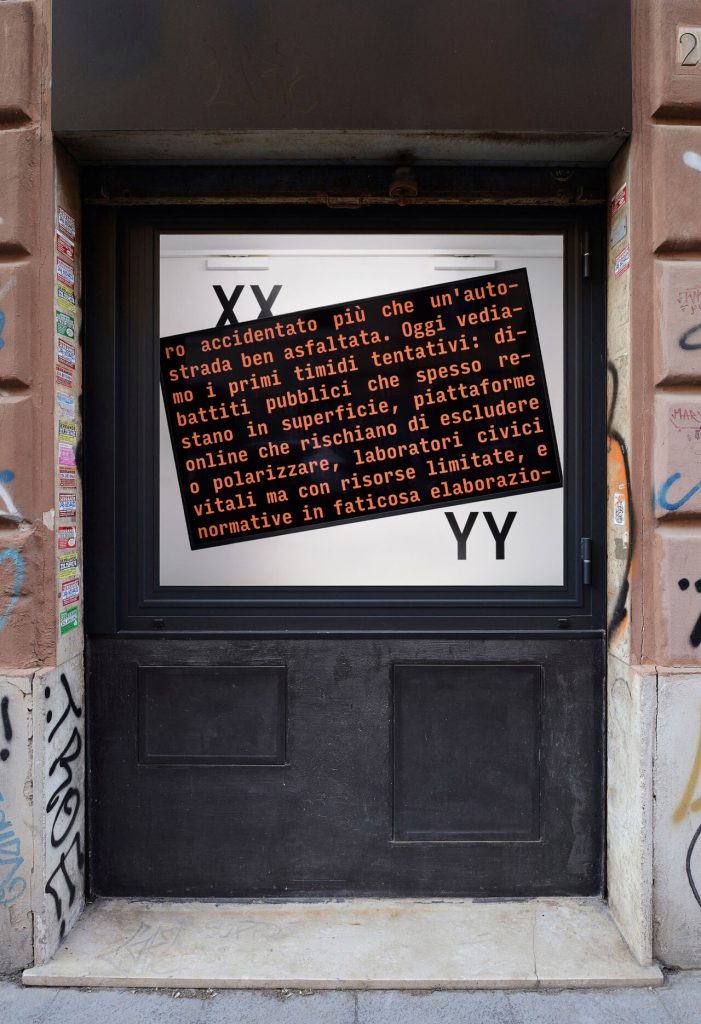
The third chapter of OVERTON WINDOW presents, for the first time, one of the latest developments in the research of Numero Cromatico, an artistic collective and research center that, since 2011, has focused on the relationship between contemporary art and neuroscience. XXYY is a dialogue between two generative artificial intelligences, contemporary chatbots, that reflect on scientific and technological progress from two radically opposing perspectives. On one side, a technophobe expresses conservative, nostalgic, and apocalyptic views; on the other, a technophile voices boundless faith in technological advancement and, in particular, artificial intelligence. Like a theatrical performance, the two purposefully trained algorithms enact the key narratives that animate the debate between the apocalyptic and the integrated, while opening a broader reflection on our relationship with technology and its possible futures. Statements of enthusiasm and fear alternate across the screen. As the conversation flows uninterrupted, we find ourselves before a stream of words that gradually seem to dematerialize, to lose consistency. The principle of reiteration upon which current AI systems are based feels increasingly distant from any real understanding of the world. At the same time, the tireless ability of automated systems to pursue their task indefinitely prompts us to ask whether it is conceivable that they might one day generate truly meaningful responses to our questions. The work also investigates the material processes behind the development of large language models such as ChatGPT, Gemini, or DeepSeek, revealing them not as neutral oracles, but as products shaped by logics of profit embedded in the very structure of their computational architectures. If, since ancient Greece, dialogue has been conceived as an ontological device for accessing knowledge of reality, today, in the context of technological mediation, it becomes a site of polarization and crystallization of partial and individual truths. In this scenario, the artist becomes an activator of alternative trajectories, capable of guiding the electronic collective unconscious toward new and unexplored horizons of meaning. With XXYY, we witness a silent exchange between two alien entities. The subject of their discussion is our future, and we, as fleeting spectators, watch from the margins.