Daniela Cotimbo
Art Curator
- Home
- About
- Re:Humanism
- Exhibitions
- OVERTON WINDOW:double blind
- The World is Sleepwalking
- OVERTON WINDOW: Collective Memory
- Lasciami Cadere
- The Future is Weird AF
- Re:humanism 4 Timeline Shift
- OVERTON WINDOW: XXYY
- Roma Arte in Nuvola – performance program
- OVERTON WINDOW: We have the same eyes
- Waluigi’s Purgatory
- Second Order Reality @HYPERMAREMMA
- Second Order Reality @MAXXI L’Aquila
- OVERTON WINDOW: Solo
- Muovendomi, stando ferma.
- Second Order Reality
- The Stone Monkey
- Tecnoriti
- Sparks and Frictions Re:humanism #3
- Beyond Binaries
- Distrust Everything
- IperSitu
- Non sono io il fotografo
- Object Oriented Choreography
- Don’t you forget about me
- Re:define the boundaries Re:humanism #2
- Within a latent space
- Allegra ma non troppo
- Complessità
- Re:humanism art prize #1
- Ionian Archaeological Archives
- Die andere Seite
- Models of display
- Se non vedete segni o prodigi non credete affatto
- CsO
- ANDIAMO Là
- Publications
- News
- Contact
The world is Sleepwalking
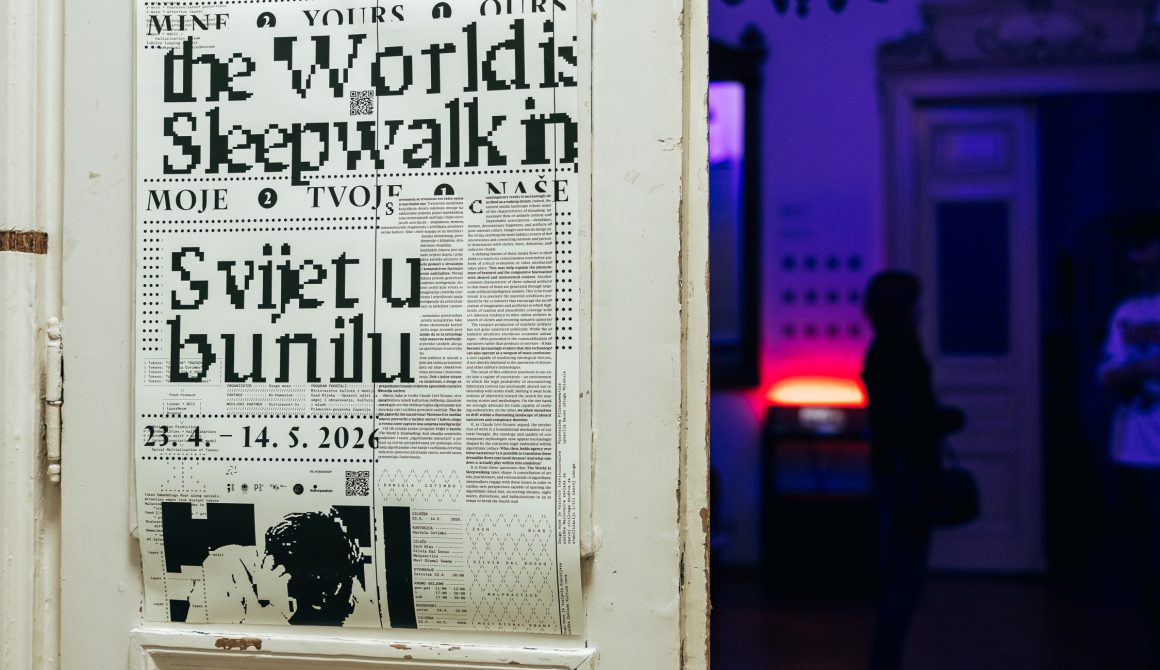
The World is Sleepwalking
23.04.2026-14.05.2026
Group Show
Curated by Daniela Cotimbo
Drugo More, Rijeka
ph Borut Brozović / Drugo more
Contemporary reality is increasingly described as a waking dream. Indeed, the current media landscape echoes many of the characteristics of dreaming: an incessant flow of unlikely content and improbable associations—deepfakes, memes, documentary fragments, and artifacts of post-internet culture. Images and words merge on the retina, reaching the most hidden corners of the unconscious and connecting intimate and personal dimensions with clichés, fears, delusions, and collective rituals.
A defining feature of these media flows is their ability to reach our consciousness even before any form of critical evaluation or value attribution takes place. This may help explain the phenomenon of brainrot and the compulsive fascination with absurd and nonsensical content. Another common characteristic of these cultural artifacts is that many of them are generated through large-scale artificial intelligence models. This is far from trivial: it is precisely the material conditions produced by the AI industry that encourage the proliferation of imaginaries and aesthetics in which high levels of realism and plausibility converge with AI’s inherent tendency to mine online archives in search of clichés and recurring semantic patterns.
Under the title The World Is Sleepwalking, this year’s 21st edition of the MINE, YOURS, OURS festival unfolds as a delirious journey to the edges of the synthetic world, suspended between wakefulness and sleep, in an attempt to inhabit this state of algorithmic trance.
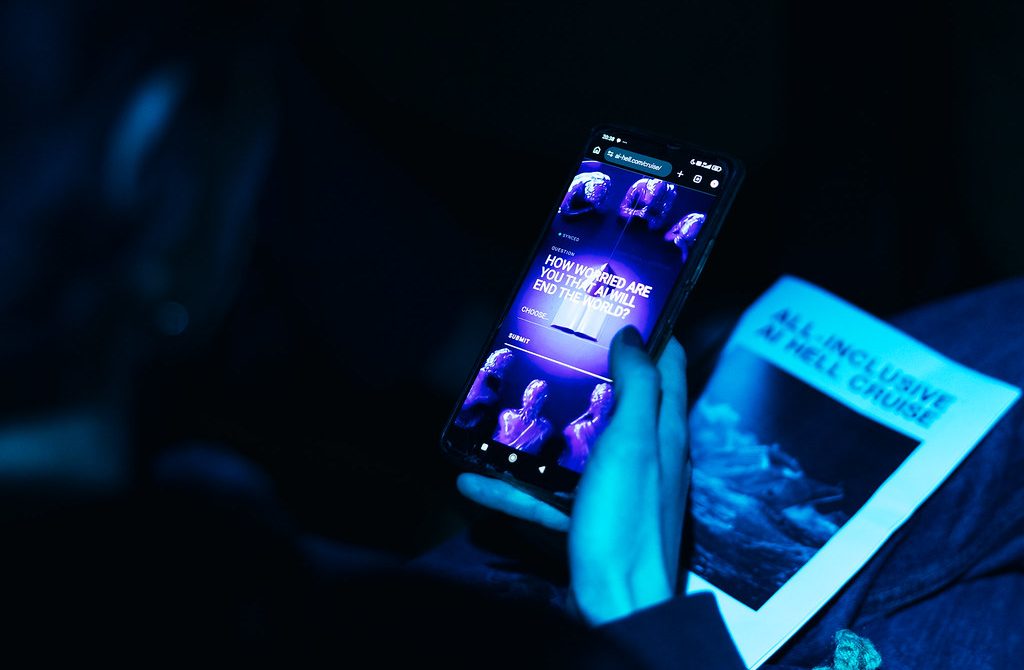
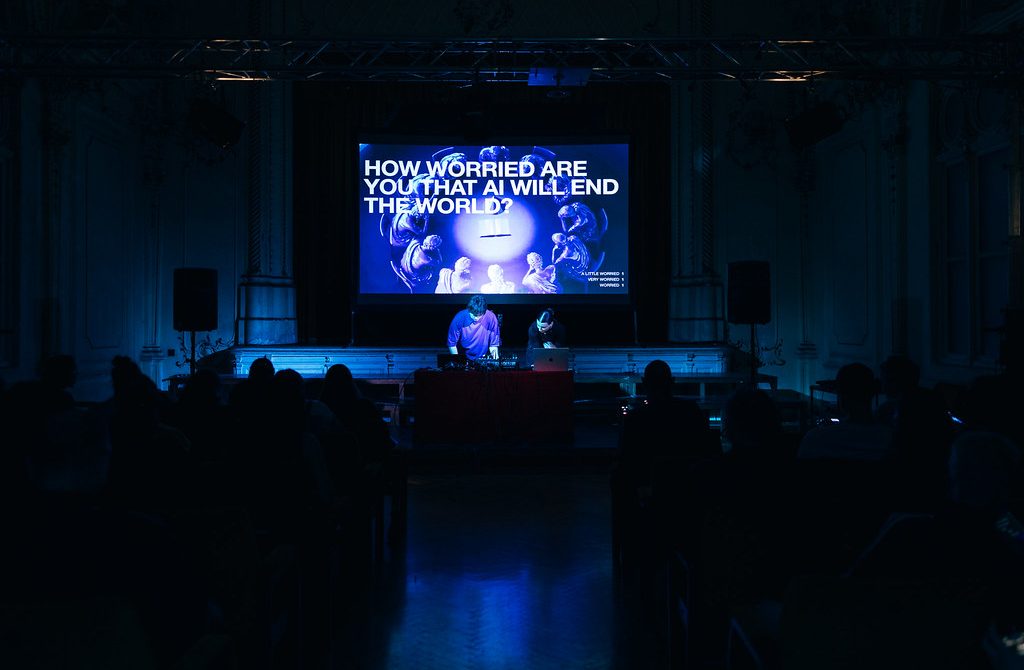
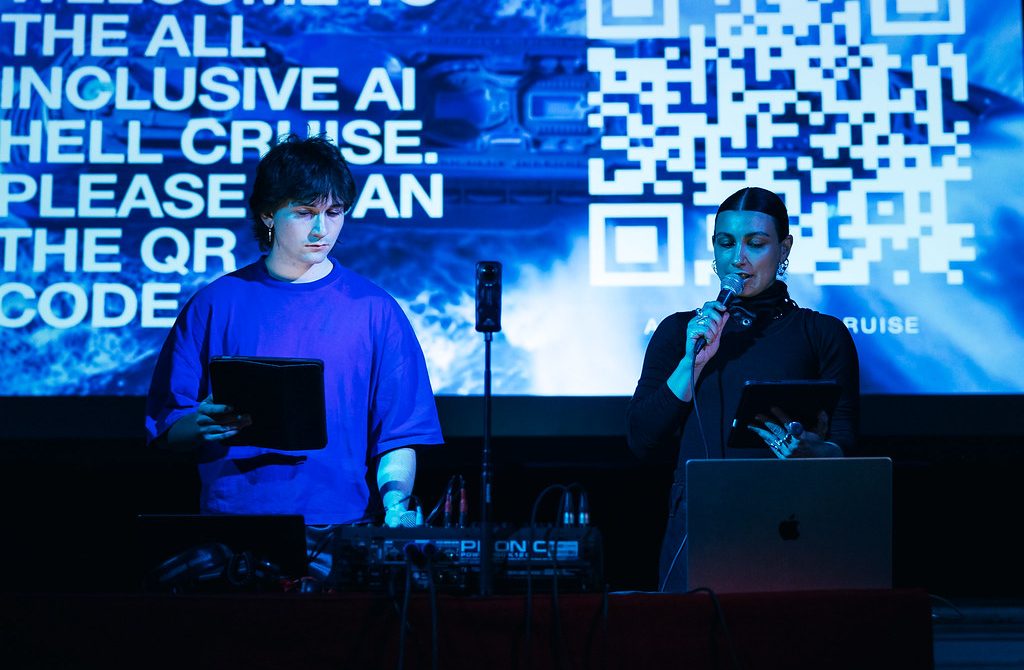
All Inclusive AI Hell Cruise, performance by Malpractice. Photo: Borut Brozović / Drugo more
The rampant production of synthetic artifacts has not gone unnoticed politically. While the AI industry promises enormous economic advantages—often grounded in the commodification of narratives rather than products or services—it has become increasingly evident that this technology can also operate as a weapon of mass confusion: a tool capable of reinforcing ideological rhetoric, if not directly deployed in the operation of drones and other military technologies.
The result of this collective psychosis is our entry into a regime of uncertainty—an environment in which the high probability of encountering fabricated content has profoundly altered our relationship with reality itself, shifting it away from notions of objectivity toward the search for reassuring stories and mythologies. On the one hand, we strongly advocate for tools capable of verifying authenticity; on the other, we allow ourselves to drift within a fluctuating landscape of absurd narratives and conspiracy theories.
If, as Claude Lévi-Strauss argued, the production of myth is a foundational mechanism of cultural thought, the typology and quality of contemporary mythologies now appear increasingly shaped by the extractive logic embedded within algorithmic culture. Who, then, holds agency over these narratives? Is it possible to transform these dreamlike flows into lucid dreams? And what role does AI actually play within this condition?
It is from these questions that The World Is Sleepwalking takes shape. A constellation of artists, practitioners, and various kinds of algorithmic sleepwalkers engage with these issues in order to outline new perspectives capable of opening the algorithmic black box, recovering dreams, nightmares, distortions, and hallucinations in an attempt to break the fourth wall.
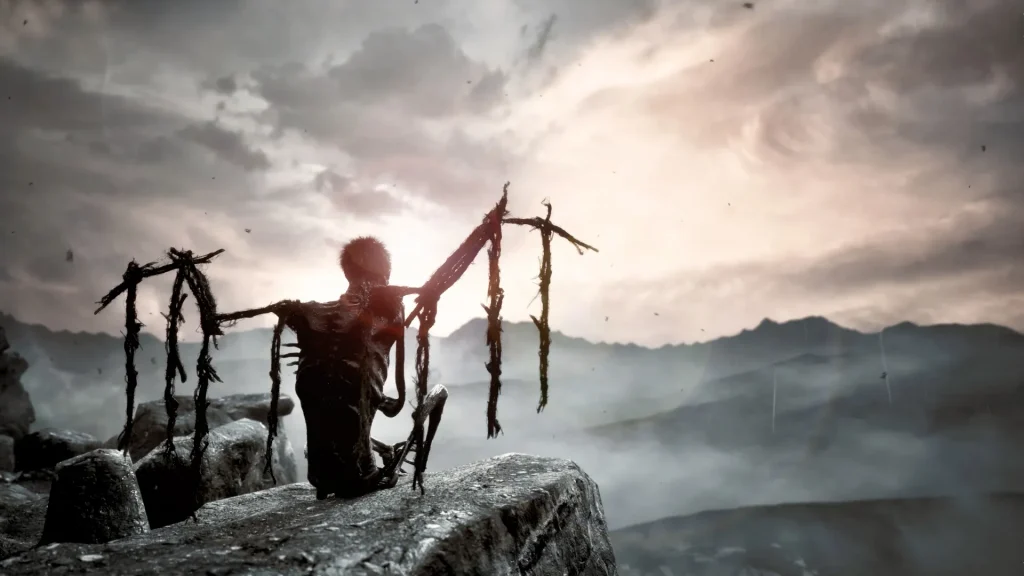
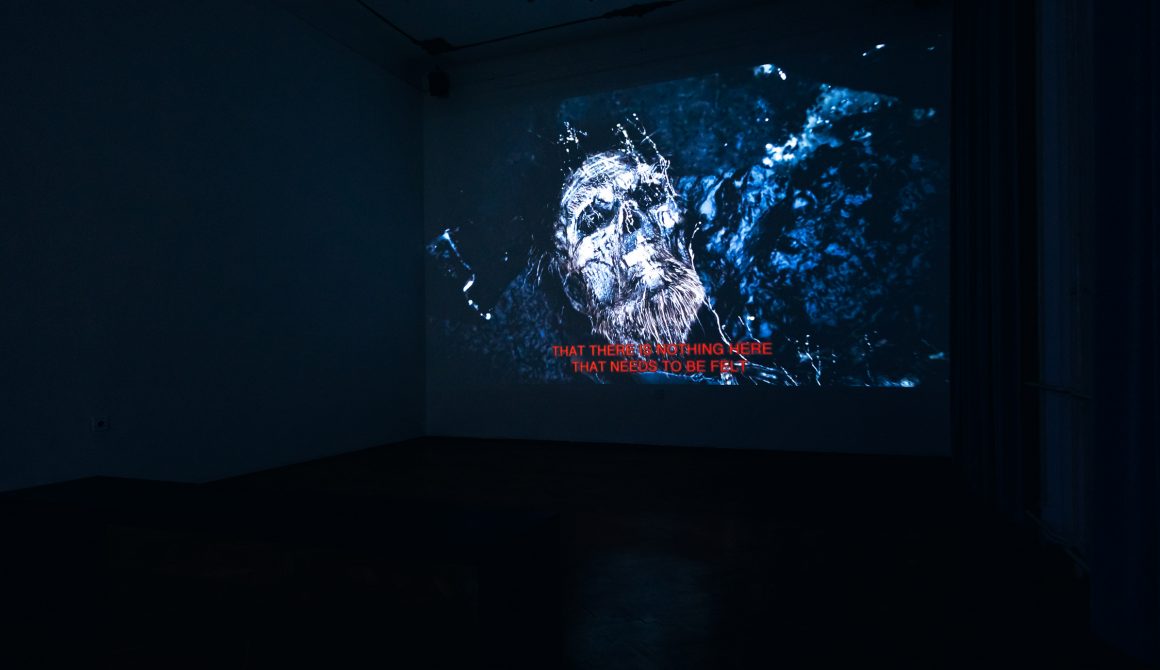
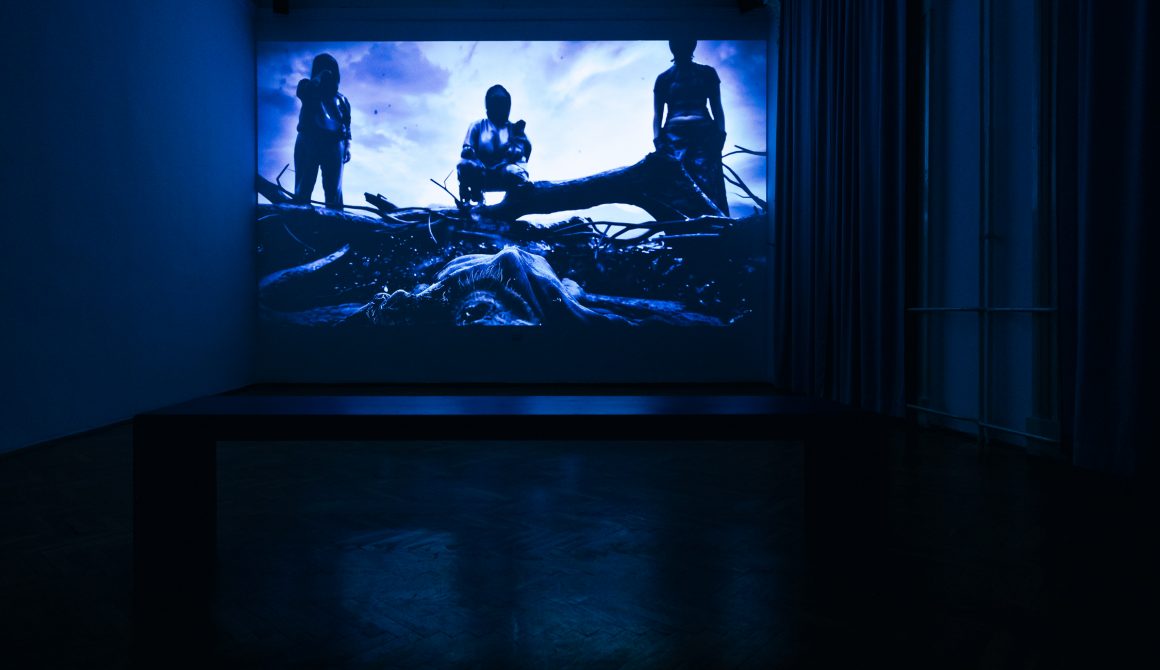
Most Dismal Swamp, The Bastard Fields, courtesy of the artistsph Borut Brozović / Drugo more
The exhibition explores how these authors construct speculative scenarios that challenge the very nature of artificial intelligence itself.
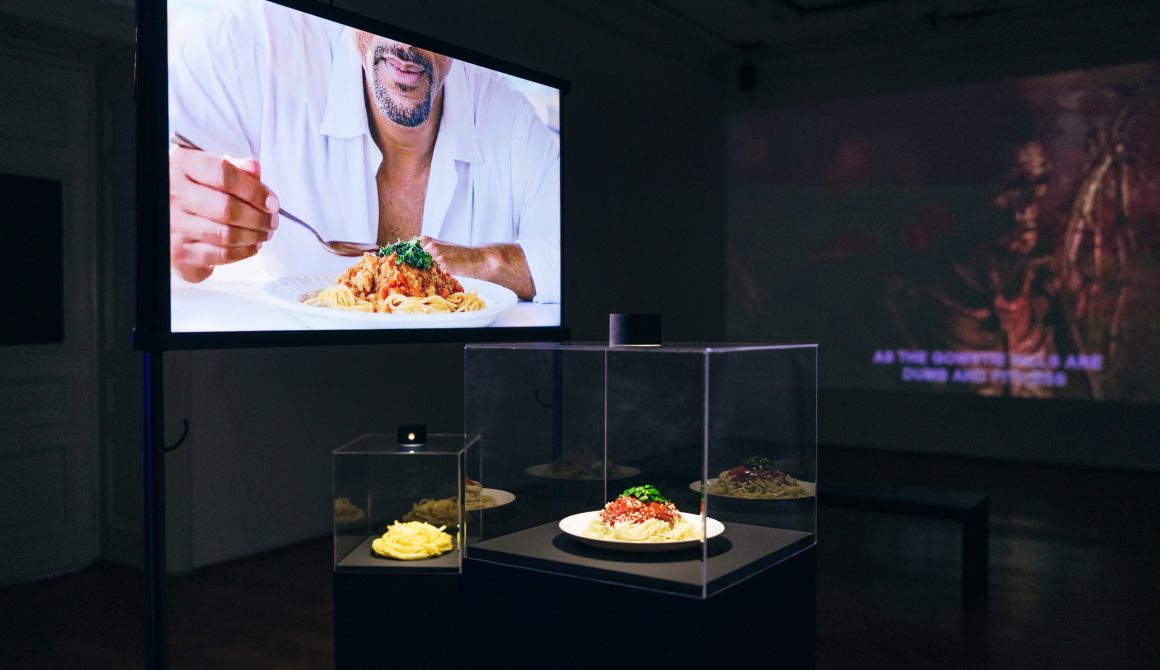
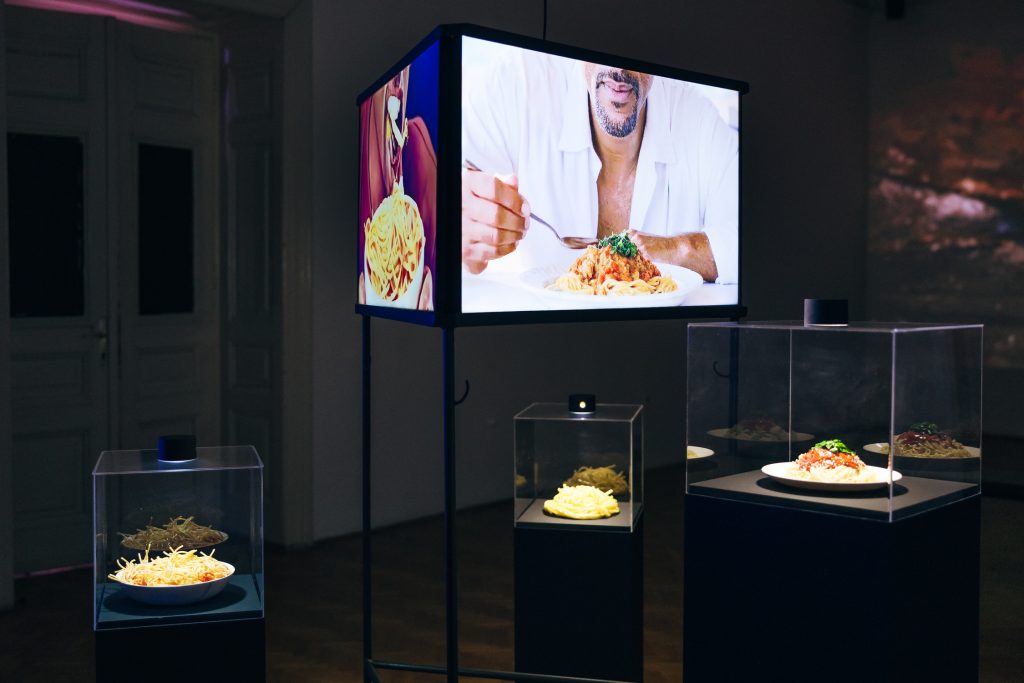
We have entered the era of post-post-post-truth, as suggested in one of the video essays narrated by a synthetic version of Adam Curtis’s voice, part of the trilogy The Future Is Weird AF by Silvia Dal Dosso. Here, a universe populated by resurrected celebrities, billionaires retreating into underground bunkers, virtual influencers, emotional advertising, and human–bot relationships forms the dystopian landscape of contemporary media reality.
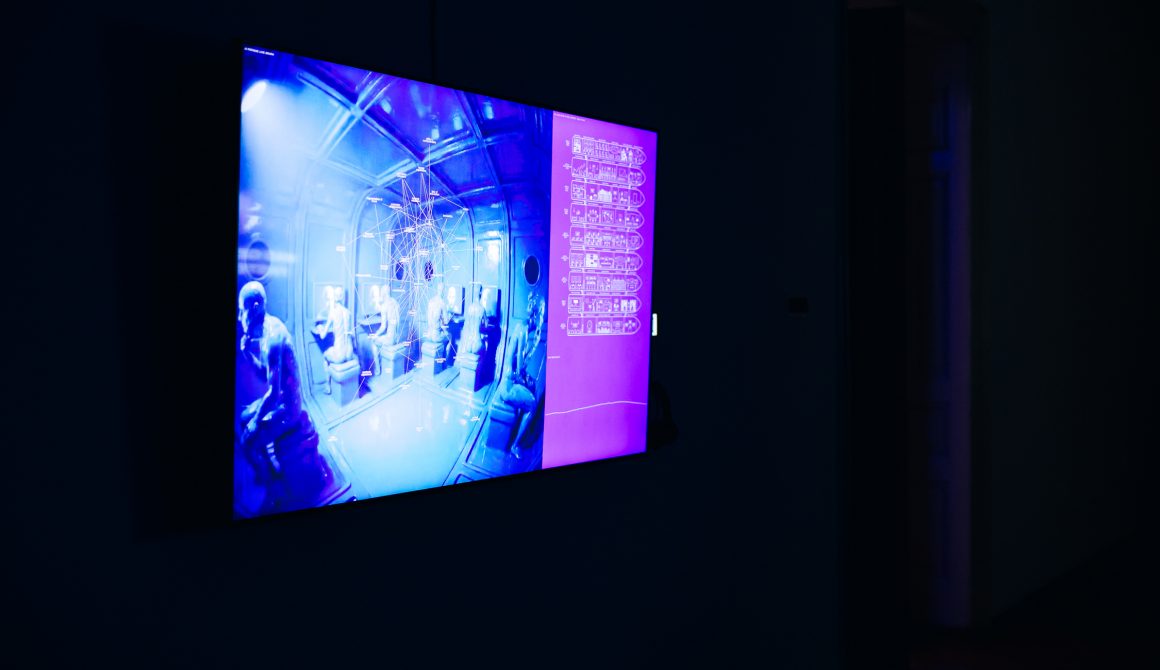
This sense of cultural vertigo materializes in The Bastard Fields by Most Dismal Swamp, a world inhabited by figures at the limits of imagination, immersed in a feverish dimension suspended between collective hallucination and sublime yet hostile architectures. Within this vision, the swamp emerges as a powerful metaphor of collapse: a liminal space where psychic crisis and the excesses of AI models become entangled.
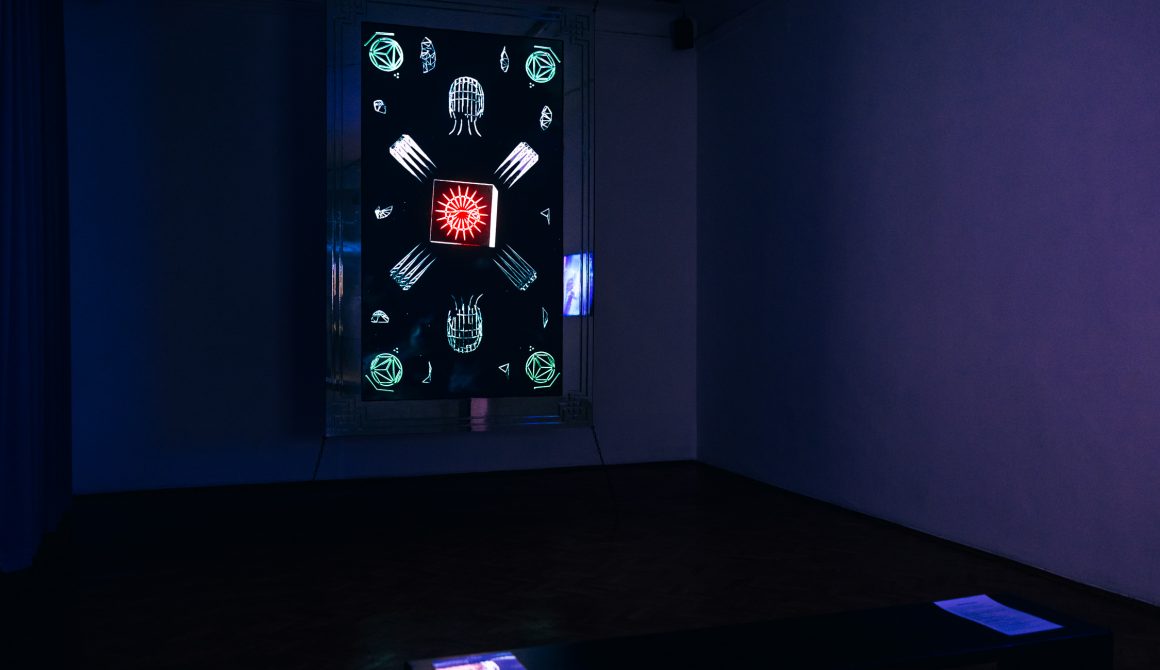
If all this may appear as pure generative delirium, Zack Blas’s installation Iudicium, with its apocalyptic and eschatological undertones, exposes the messianic impulses of Silicon Valley tech culture, connecting ancient and contemporary rituals, esotericism, surveillance, and fantasies of omnipotence in which the new god of AI reduces life to abstraction and prediction.
It may therefore be time to turn to AI Fatigue Rehab Agent, the conversational bot developed by the duo Malpractice as both a therapeutic device and a pressure valve for the burnout produced by the uncritical adoption of generative AI. In a world driven by optimization, how might we enact a true technological détournement?
The exhibition will be accompanied by a public program featuring the artists and the curator, scheduled for April 24.
All images here